
ARTICLE
From Gate to Workplace
Why connecting access and workforce presence matters for modern properties.
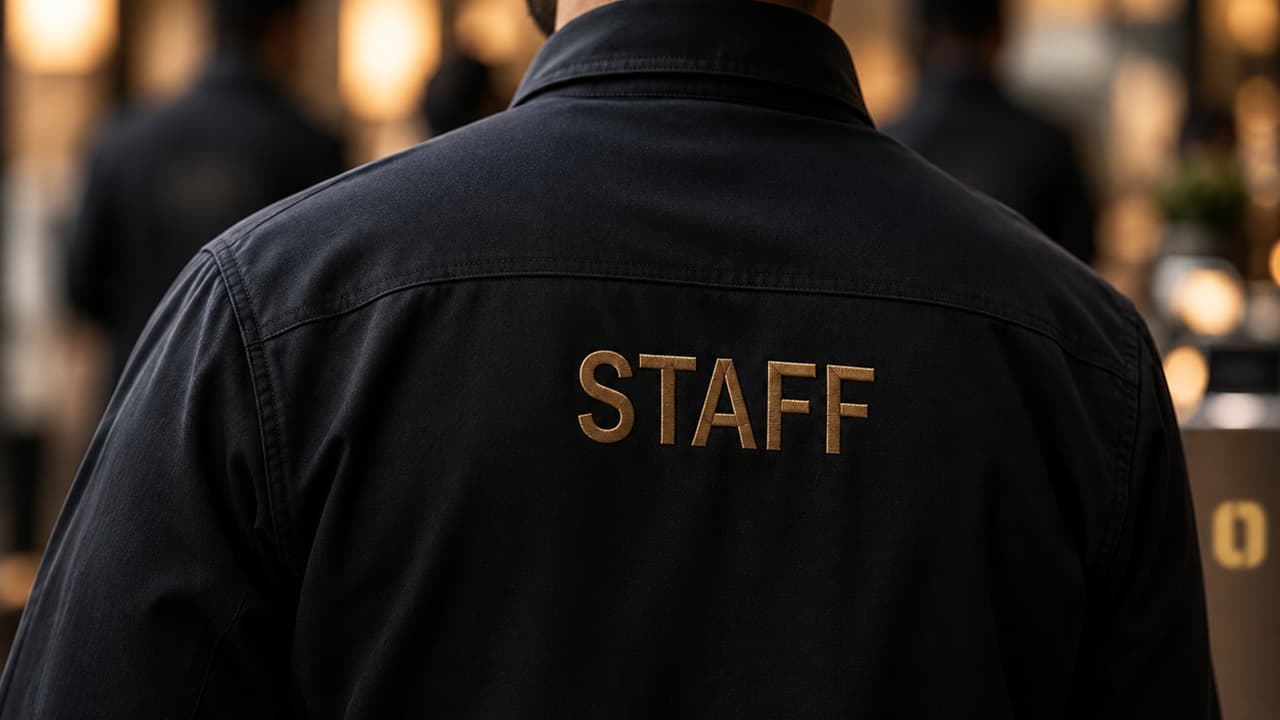
A person entering a property and a person beginning work are not necessarily doing the same thing.
It sounds obvious.
Yet in many large developments, those two moments are still treated as though they are identical.
Consider a member of staff entering a large community at 7:50 AM.
They may still need to park, walk across the development, change clothes or travel to another building before reaching their workplace.
So, when did they actually arrive for work?
The answer matters more than it might seem.
Modern properties are becoming workplaces too
Large residential communities, mixed-use developments, resorts and hospitality projects can employ significant numbers of people.
- Security teams.
- Restaurant staff.
- Maintenance personnel.
- Housekeeping teams.
- Administration.
- Hospitality teams.
- Technicians.
- Contractors.
- Valet personnel.
The larger the property becomes, the more complicated its workforce becomes.
Yet many developments still think about these people primarily from one perspective:
Did they enter the property?
That is important, but it is only part of the picture.
Presence needs context
Knowing somebody entered tells management one thing.
Knowing they arrived where they were supposed to work tells management something different.
The distinction becomes even more important when a development contains several businesses, buildings, or operational areas.
A person may legitimately enter the property without being present at their assigned workplace.
A contractor may be authorized to enter, but still need to reach a particular job.
A staff member may enter early and begin work much later.
These details matter to different departments for different reasons.
The problem starts when every department maintains its own disconnected version of what happened.
Fragmentation creates unnecessary work
- Security may know one thing.
- HR may know another.
- The restaurant manager may maintain another record.
- The contractor supervisor may rely on messages.
- Operations may have its own spreadsheet.
Nobody necessarily has bad information.
But nobody has the complete picture either.
When something needs to be investigated, several people become involved just to reconstruct a simple sequence of events.
That is inefficient.
And over time, inefficiency becomes normal because everyone learns to work around it.
Good operations connect related decisions
Modern property management should think about the relationship between access and workforce activity.
Not because every movement needs to be tracked.
And not because every system needs to become one giant system.
The goal is much simpler.
Important operational events should make sense together.
If someone is allowed onto the property for work, management should be able to understand that access within the wider context of their role and responsibility.
That makes staffing clearer.
Exceptions are easier to investigate.
And different departments spend less time reconciling information.
This becomes more important as properties grow
The more complex the development, the more valuable operational coordination becomes.
A small building may comfortably manage people informally.
A large destination cannot rely indefinitely on the same approach.
At some point, the property needs structure.
The question is not whether technology should replace human management.
It should not.
The question is whether management has the information and processes required to make good decisions without unnecessary friction.
A modern property should be able to answer both questions:
Who entered?
and
Were the right people where they needed to be?
Those are related questions.
But they are not the same question.
Understanding that difference is the beginning of better workforce operations.